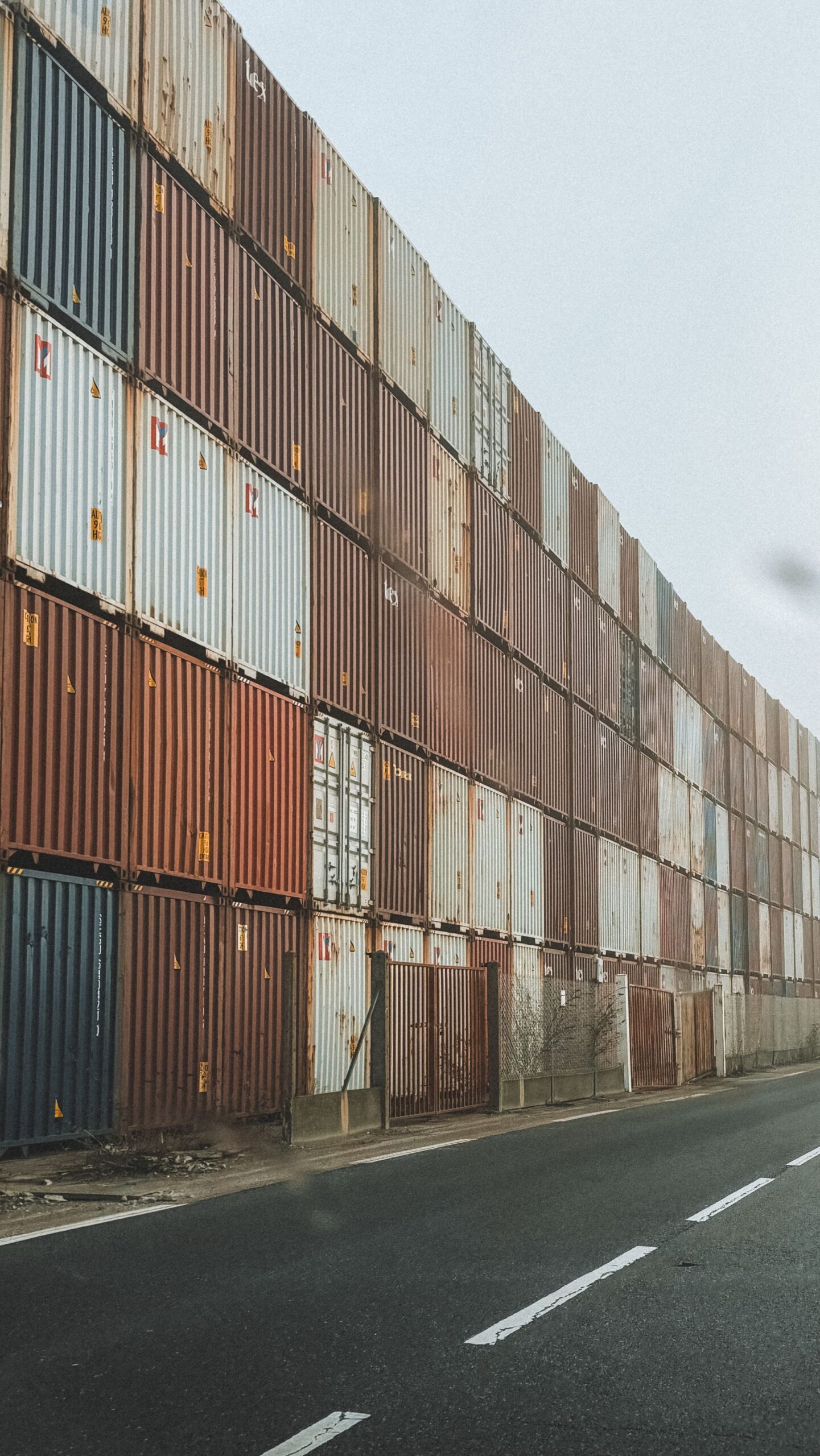
A company can lease 50,000 square feet of warehouse space in Central Jersey within sixty days. Finding three acres to park the trucks that service that warehouse can take a year, if it happens at all.
That gap is what’s driving the rise of industrial outdoor storage, known in the business as IOS. It’s land set aside for parking and maintaining trucks, vans, trailers, and heavy equipment. The companies that need it read like a list of the biggest names in logistics. Amazon, FedEx, regional trucking outfits, and equipment repair shops all depend on it to keep vehicles moving. A landscaping company staging mowers and trailers has the same problem as a fleet repair shop that needs a yard to work on 30 vans at once. Neither can solve it with warehouse space.
What Is IOS?
IOS sounds simple. A paved or graveled lot, a fence, maybe a small office trailer. No warehouse required. What makes it valuable isn’t the improvements. It’s the zoning.
Most towns in New Jersey never planned for this use. Their ordinances were written around warehouses, offices, and retail, not open-air truck yards. A site can have the right size, the right highway access, and the right price, and still fail because the municipality won’t allow the use. That single constraint is why IOS trades differently than almost anything else in industrial real estate.
Why Demand Has Gone Vertical
E-commerce didn’t just create demand for warehouse space. It created a parking problem. Every package delivered by van, every piece of freight moved by regional carrier, requires a fleet, and every fleet needs somewhere to sit between runs. A company running 30 or more vehicles cannot store them inside a warehouse. There isn’t room, and warehouses aren’t built for that purpose.
Newmark estimated in a September 2025 report that IOS now covers roughly 1.4 million acres nationwide, an area close to the size of Delaware. Despite that scale, institutional investors control only an estimated 7 to 10 percent of it. The rest sits with private, often long-tenured owners, many of whom have never been approached about what their land is actually worth.
The pricing tells the same story. IOS sites in Central Jersey are leasing at $8,000 to $10,000 per acre. Vacancy for IOS sat at 2.5 percent in the fourth quarter of 2025, less than half the 6.7 percent posted by conventional industrial product, according to CBRE data reported by CRE Daily. Institutional capital has noticed. PwC’s investor survey, cited by Colliers, valued the overall IOS market at roughly $200 billion, with well over $1 billion in fresh institutional capital raised in a single year.
The buyer pool backing that growth keeps getting bigger. Commercial Property Executive reported that Alterra IOS closed a $244 million financing note with Blackstone in June, secured by a 37-property portfolio covering 165 usable acres of outdoor storage and more than 800,000 square feet of warehouse space. The tenant mix behind that portfolio has moved well past trucks and trailers. Fleet operators charging electric vehicles and companies storing backup energy systems are now leasing the same yards once reserved for parked equipment.
Why It’s Especially Scarce Here
Central Jersey has the two things IOS operators need most. It sits within a dense population corridor between New York and Philadelphia, and it has direct access to Route 1, Route 130, the Turnpike, and I-295. JPMorgan’s commercial banking team has pointed to that exact dynamic nationally, noting that last-mile delivery demand is highest in densely populated areas where land is already scarce.
Scarce is the right word for what’s happening in our market. Towns across Mercer and Middlesex Counties are more likely to oppose outdoor storage than to approve it. Neighbors don’t want to look at parked trailers. Planning boards worry about truck traffic on local roads. The result is a market where demand keeps climbing, and the supply of legally zoned sites barely moves.
What This Means If You Own the Right Land
If you own an underused industrial parcel, vacant land zoned for storage or heavy commercial use, or a property with excess yard space, you’re sitting on something rarer than you probably realize. National operators are actively hunting for sites like this, and they’re willing to move fast and pay a premium for one that’s already zoned correctly.
We’re seeing that firsthand. Fennelly is currently marketing two adjacent outdoor storage sites to national operators: one an income-producing 2.1-acre property with an existing tenant, and the other a 40-acre parcel zoned specifically for outdoor storage use. Both are the kind of assets that used to sit quietly for years. Not anymore. Our marketing team is built to find and reach the specific buyer pool that wants this asset type, not just list it and wait.
If disposition, rather than a long-term hold, makes more sense for your property, our property disposition team works through valuation, positioning, and buyer outreach so you’re not leaving money on the table because the right buyer never heard the site was available.
What This Means If You Need the Space
For companies running fleets, the calculus is different but just as urgent. If your business is adding vehicles, taking on new routes, or supporting a warehouse lease with a growing delivery or service operation, you likely already know how hard it is to find compliant outdoor storage nearby. Waiting until the lease is signed and the trucks have nowhere to go is the most common mistake we see.
Start the search for outdoor storage at the same time you start the search for warehouse space, not after. Browse what’s currently available or talk with our tenant representation team about what a compliant site actually looks like in this market before you commit to a lease that assumes parking will simply work itself out.
The Bottom Line
Outdoor storage isn’t glamorous. It won’t show up on a skyline. It has become one of the few property types in Central Jersey where demand is guaranteed, and supply is capped by something no developer can build around: local zoning. That combination is exactly why owners and operators need to move on it now, not after the next operator finds it first.
If you own land that might qualify, or you need space for a growing fleet, reach out to Fennelly, and we’ll walk the property or the requirement with you and tell you plainly whether it works.
